Educate yourself on the ways of cultures different from your own. If not for any other reason than to understand others, and maybe yourself, a little better. The more of us who do this, the greater the benefit to humanity. Open your mind and even critique your own culture, modifying your beliefs and actions to achieve a more understanding, well rounded, and compassionate world view.
I am fortunate enough to have met people in many parts of the world. People of different races and cultures, people from different socioeconomic backgrounds, people with different religious beliefs. I have worked and conversed and traveled and shared meals with them, and what I can say with complete honestly is that I have found reasons to like them all.
At your ages – 12, 10, and 7 – each of you still sings in the shower. Loudly, as if no one else is in the house. You have all done this since you were small. A child’s singing is one of the most beautiful things that can grace a parent’s ears. I pray that you will one day experience it.
The long weekend we spent with friends on Captiva Island, driving a caravan of golf carts to dinner, you and your friends packed onto the back of each, all of you singing at the top of your lungs:
“And I miss the way you make me feel, and it’s real. We watched the sunset over the castle on the hill!”
“Amazing that they all know the lyrics?” I remember thinking. It sounded so wonderful, all those little voices filling the humid air. Fortunately I was wearing sunglasses so no one could see the tears in my eyes. The rest of the world did not matter. We were detached from all else, with great friends, insulated and happy, enjoying one of those rare moments in life when there is literally no place you would rather be.
In The Jolly Corner Henry James writes “Proportions and values were upside-down.” I underlined and boxed in this sentence when I first read it, as it felt a most concise and accurate way to describe our society today. More, bigger, me, mine. That, to a large degree, is who we are, not just as a society, but a species.
This is simply an opinion, of course, although one which most people I speak with agree. Let’s assume I am correct and that our proportions and values are upside-down. How do we bring about necessary positive change? The opposite view, I suppose, would be “Less, smaller, you, yours.” This seems an approach far more in line with appreciation, compassion, sustainability, and peace.
However, this is quite altruistic and therefore only a dream with no potential of wide acceptance, much less practice. So, how do take real, practical steps in this direction that will ultimately flip our proportions and values right side up? Are we, as a society and species, able to shift our world view from more to less? From me mindset to one that focuses on service to others?
There is only one person we are in control of. Therefore, any change we wish to see in the world begins with us. Aspire to live simply and with humility. To treat people with respect. To be kind and help others. This is not as easy as it sounds. It takes extraordinary devotion. Mental and emotional rigor. Again and again we will be tested, and so we must make it our deepest desire and mission in life to be a light in the world.
Wake each day and before you rise from bed say a prayer for guidance to this end. Then set about your day with a quiet resolve to influence by way of action. To set a positive example that others will follow. To lift the spirits of others. That, I believe, is the best we can do.
“Display those virtues that are wholly in your own power — integrity, dignity, hard work, self-denial, contentment, frugality, kindness, independence, simplicity, discretion, magnanimity.” —Marcus Aurelius
Somewhere I heard the phrase “restless striving.” This phrase has stayed with me, as I feel it very well describes the state in which many of us live. Perhaps it is our restless striving that carries so many of us from one phase of discontentment to another.
Soren Kierkegaard wrote, “Anxiety is the dizziness of freedom.” The fact that we have options, i.e. freedom, is the root cause of our anxiety. This freedom leads us to believe there is always something else out there that might be better for us. We could live in a different city, send our children to a different school, have a more fulfilling job, a better home, and so on. We are constantly pondering numerous alternatives to our current state, hence, the anxiety.
This day and age, contentment seems a dying concept. Is it possible to continue to strive, to work to achieve the goals you have set for yourself, while fully appreciating your current lot in life? Maybe you will accomplish great things. Maybe all of your dreams will come true. And maybe they won’t. There are many unknown variables that will dramatically alter your course, but if you are aware and can accept this inevitable randomness, and can continue to strive while remaining content with whatever good fortune has befallen you, you will experience a greater level of contentment. If you can do this while transcending society’s view that success is defined by financial status and material goods, better still.
“He is happy whom circumstances suit his temper; but he is more excellent who suits his temper to any circumstance.” –David Hume
Below is a passage I came upon in Frederick Nietzsche’s Untimely Meditations. It seemed important to pass along.
“This is the means by which an inquiry into the most important aspect can be initiated: let the youthful soul look back on life with the question ‘What have you truly loved up to now; what has drawn your soul aloft; what has mastered it and at the same time blessed it?'”
In Nietzsche’s book Thus Spoke Zarathustra, he explains that the goal of humanity is to become the Übermensch, or “Over-Man.” As best I understand it, the Over-Man is one who has transcended the rigors of adulthood and reverted to the playful and innocent mindset of a child. And while I fail miserably each day at becoming, or even resembling, the Over-Man, my life is better for trying.
Who knows, maybe you’ll find this concept interesting and aspire to become the “Over-Woman.” Regardless, do what you can to apply a childlike perspective to aspects of life which cause unreasonable stress. Be playful and spontaneous. Maintain a lighthearted attitude toward your own hardships. The more you are able to laugh at life’s absurdities, the happier you will be.
The decision to retreat daily to a remote mountain cabin came after a stream of news so consistently maddening I felt on the brink of a nervous breakdown. I had become addicted to the news feed and spent a good portion of the day agonizing over what I could do as a writer to allay the precipitous divide in our country. A division I worried might lead to civil unrest. The tumultuous state of our nation had me questioning whether the strides we had made toward becoming a more civilized society had been little more than blissful illusions.
I committed to drive up to the cabin each day, a 25 or so minute commute from town, and spend my time working in solitude without distraction. The cabin, I should clarify, was in fact a beautiful old home perched on a ridge overlooking Wildcat Valley, entrusted to us when vacant by the home’s kind and generous owners. You will remember it as you grow older, I hope, from occasional weekends spent exploring the property, playing board games, reading by the fire, and watching movies in the basement.
Aside from swearing off news in order to maintain my sanity, I set to focus only on the things that truly mattered. I would not waste time on issues that were superficial or beyond my control. My attention would be dedicated to those things people reflect upon at the end of lives – the rich and important stuff — you being at the top of that list. I desired more undisturbed time with you and would work to approach each engagement with the same mindset from which you, a child, would approach it. My work, obviously, remained important. I would spend the better part of each day fulfilling obligations the best I could. Obligations, mind you, I was fortunate to have. Beyond that there was need for something else. A project of larger significance.
I asked myself several questions. They were self-centered questions. Questions purely of the ego. What would I like to leave when I am gone? What sort of contribution do I wish to make to the world? How would I like to shape my legacy?
At this point in my life, what I had to leave for you would have been of little consequence. Even today, well into this project, I do not know whether the end product will ever be read, much less have any real value. With that awareness, I suppose my only comfort is that an effort is being made.
Over the years, I spent many days at the house in the mountains working in a spacious office above the garage. Every time I was there I would leave feeling that this was the only place for me to do good work. Every other option – coffee shops, the library, a ranch office where I work on the adventure book series, even my home office/library/playroom, which happens to be my favorite room in our home – had far too many distractions to undertake concentrated work.
During a long day at the house I would get the urge to move and change scenery. The remedy was a short walk through a cluster of Aspen trees to the gently sloping hill behind the house. Often I would take a seat on a low, flat rock that stuck out of the grass, as this rock had, over geological time, developed comfortable contours for sitting. From the rock I could overlook the valley and enjoy the warmth of the sun.
This became the spot where on days of good weather I would sit and read or think or repeat quietly The Prayer of Jabez. “Oh Lord, that you will bless me indeed and enlarge my territory. That your hand will be with me to guide me, to keep me from evil so that I may not cause pain.” This is a prayer I had learned of by way of a book our friend had given your mom and I to read after I had admitted to her that I had never been able to pray for myself.
My interpretation of the prayer is that it is a request to God to expand our influence and keep us on a righteous path so that we might do some good for the world. In such as setting, overlooking the valley that ran to the high peaks of the Elk Mountains, prayers were often drawn from me as if summoned by nature. The rock where I sit is fully exposed, and on sunny days in the winter it attracts enough heat to keep me warm. In the summer the rocks warmth is soothing for a time, but will eventually grow uncomfortable, so after fifteen or so minutes I simply change locations, moving up the hill where I can sit in the shade of a pine tree and resume whatever I am doing — reading, thinking, praying, usually a combination of the three.
The first snow of this year came on October 1. Aspens and cottonwoods stood like golden torches, setting the mountainside ablaze, while the sagebrush on the arid slopes looked like it had been painted garnet and amber. The cabin was built at an elevation of approximately 8,150 feet and the temperature this day hovered right around freezing, so the snow was wet and heavy. The snow collected on limbs, bending them like arches. Two large limbs had already snapped by the time I had arrived at the house. More were sure to succumb to the weight. As anxious as I was to sit at the desk and get to work, I was unable to ignore the trees. I had a responsibility to care for this space that had been loaned to me, and that responsibility extended to the trees, as they added much value to this sanctuary.
Pulling my hood over my head and securing it tightly around my face, I ventured out, gloveless, to shake the accumulating snow from the bending branches. One by one I grabbed the limbs and shook, creating a micro-blizzard each time. Every second or third limb I would have to stop and tend to my hands, which burned from the cold. Then I would begin again. I did this until every tree and shrub around the home had been relieved of its weight. It was a particularly rewarding start to the day.
That afternoon, as I packed up to leave for home, I realized that had I not taken the time to shake the trees free of snow that morning, I would have accomplished absolutely nothing of any value the entire day.
We are fortunate to have good relationships with our extended family. You have wonderful grandparents that cherish their time with you. With friends we never have issues. With those who have differing and even off-putting opinions, we find ways to base our relationship on common ground. It is work, but the rewards far outweigh the effort.
What seems illogical or even ridiculous to you will make perfect sense to someone else. Try to remember this and avoid being judgmental. Be a friend. Show compassion. Help others to carry on.
An individual’s views and opinions are made up of an amalgamation of life experience, including upbringing, environment, education, one’s understandings and misunderstandings of how the world works, as well as numerous other variables. Most are not easily swayed from their opinion. In fact, many become angry and even defiant when their position is challenged, even in instances when the opinion they hold can be easily disputed. While making an effort to listen to opinions that, on the surface, I disagree with, and being open to consider what merits these positions may hold, I have, in general, made a habit of avoiding conversation that will stir up contentious emotions, especially with those whom I love and care for. There is no point in it, less making clear to both parties that your positions are at irreconcilable odds.
There is a reason those who practice law spend countless hours preparing an argument before trail. To expect a well thought out argument from a non-expert at a family gathering or dinner with friends is unrealistic. What you are getting from an individual in most cases is how this person feels. Unless you are an expert in the matter, you can only assess whether or not these feelings mesh with your own, then decide whether or not to make your own feelings known. What you risk, should your feelings differ from a loved one, is the deterioration of a relationship that is important to you.
People with high moral standards may tell you that one should not refrain from making known the principles upon which they construct their lives, especially when opposition to those principles is being voiced, regardless of how it may impact one’s relationship with another. I do not think this is the best course of action. I have loving relationships with a number of people who have strong opinions contrary to my own. My relationship remains strong largely because I avoid discussing divisive topics and do my best to divert the conversation to a different topic when necessary. Instead of harboring ill will toward that person as a result of these differences, I choose to focus on what it is I love and admire about the person. While frustrating at times, exercising restraint in order to maintain a healthy relationship with those I care about is far and away the better option. This is just my humble opinion.
To fathers who may read this, I encourage you to write down some of your own thoughts and feelings. Explain in simple terms what it is about your child, or children, that brings you joy. A single letter is enough to communicate your deepest feelings. A letter will also help you to avoid getting bogged down with anything as long-winded as this. You can be certain, regardless of what you leave behind for your children, this letter will be one of their most cherished possessions.
Write a letter that lets your children know how you feel about them.
Considering what is important in life it becomes clear to me that my family is all I need to be content. Your presence, your smiles, your own contentment and happiness. As a family, we are close. Despite the occasional arguments, we love one another. We laugh, cry, and pray together. I am blessed to have you in my life.
In 2013, I was in New York City for a book event and took a cab to a meeting in midtown. The driver was from Sierra Leone and had lived in the United States for twelve years. When I asked if he returned to Sierra Leone often, he told me that he did not, though he still had family and friends there that he had not seen in a long time. I thought for a moment that maybe this man was here against his will, simply because there was employment to be had, and otherwise would have returned to Sierra Leone to be with his family.
I asked, “Do you prefer living in the United States or Sierra Leone?”
The man laughed aloud and then apologized for doing so. “I do not mean to be rude,” he said. “It is just that your question is like asking me if I’d prefer living in heaven or hell.”
This is the type of perspective that can only be gained through experience. Seeing the world with your own eyes. Absorbing humanities deepest miseries with all of your senses. If only I could have kept this awareness in the back of mind, allowing myself to be subconsciously guided every hour of every day by it, I may have discovered a steady sense of contentment and gratitude at my place in this world.
Let’s expand on this point with what Carl Sagan called the “Pale Blue Dot.” What he is referring to is the view of earth from outer space. It appears a lonely spec in a vast universe. Sagan said that astronomy is a humbling field study, able to relieve one from the delusion of self-importance. The view of our tiny planet from space illustrates this point. From the perspective of the infinite universe, you and I do not even exist. Ironically, I find comfort in this.
Our lives are small, even those that seem big. They are over quickly, even those that last 100 years. In the words of economist John Maynard Keynes, “In the long-term, we’re all dead.” So what do all the trivialities in our lives really matter?
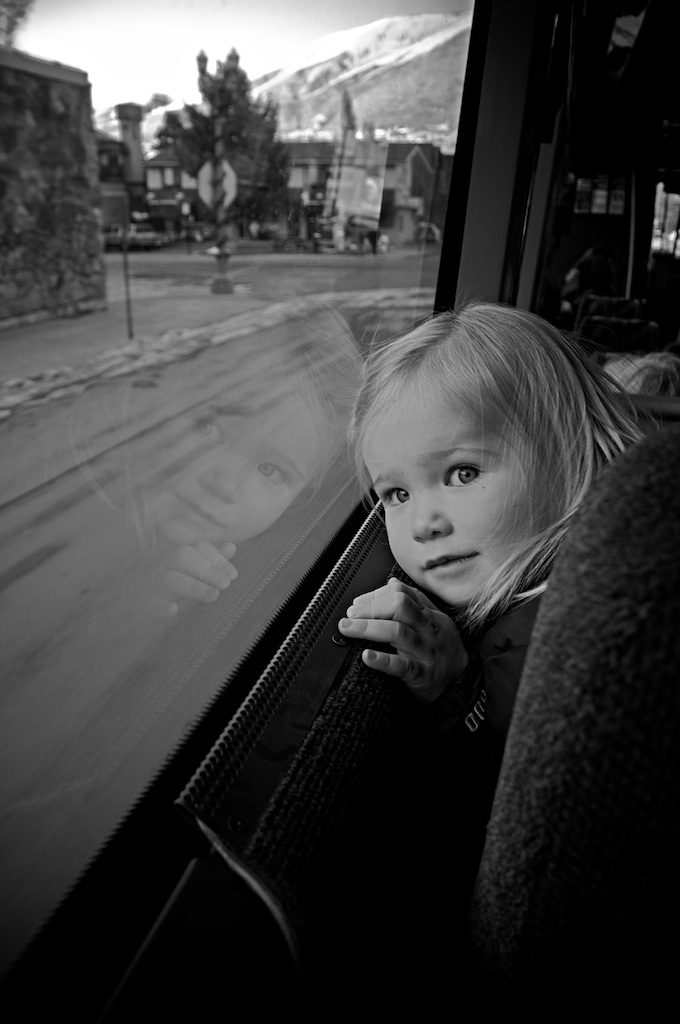
 Notes From A Father